
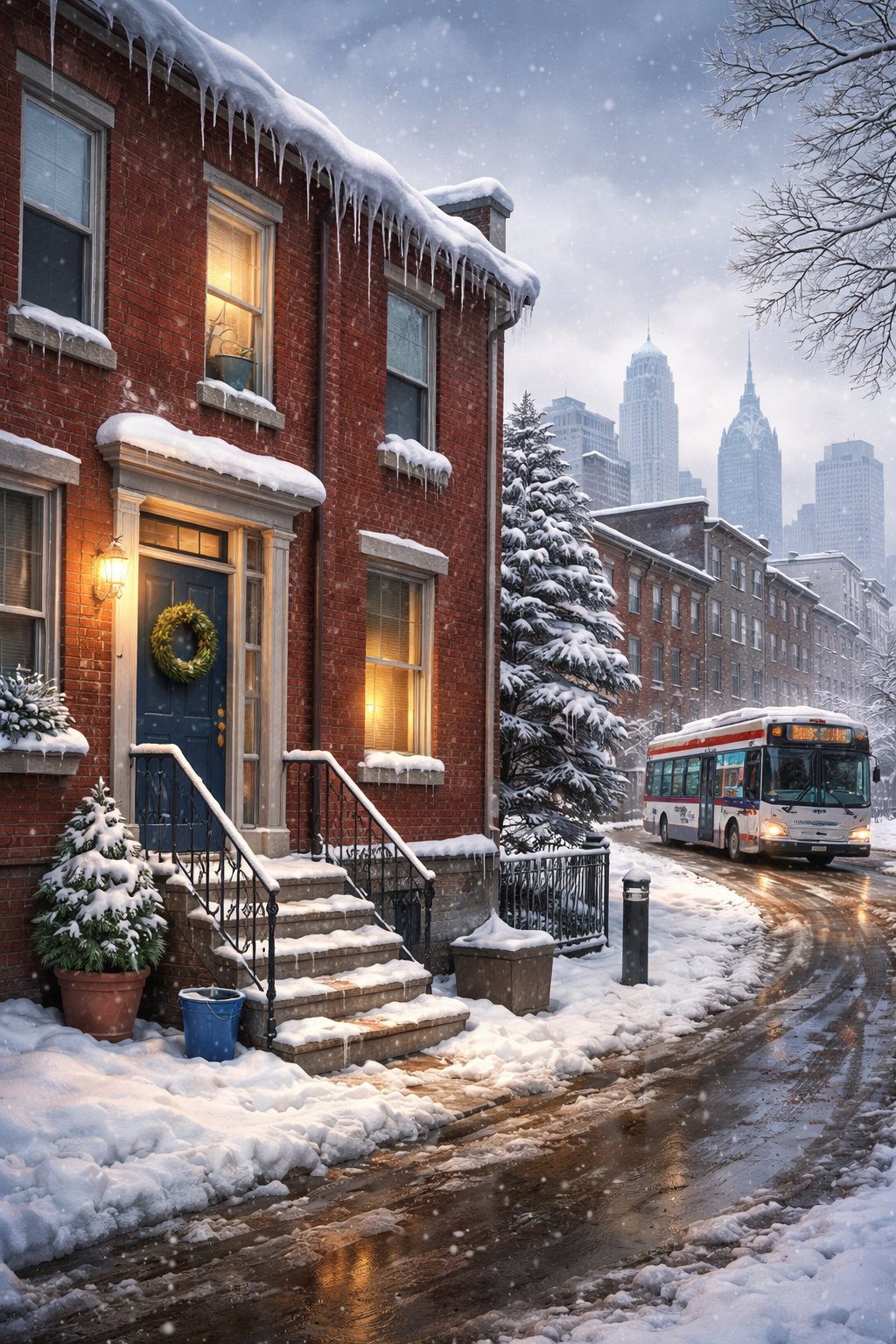
Winter storms in Philly can be brutal—heavy snow, freezing rain, and frigid winds put your home’s exterior to the test. If you’ve discovered a leaking roof after the latest blast of winter weather, you’re definitely not alone. Many homeowners across the city face this exact issue, especially in older rowhomes and townhouses that are common in neighborhoods like Fishtown, South Philly, and Mt. Airy.
Let’s break down what’s likely happening, what you can do yourself, and when it’s time to call in a pro.
Why Roof Leaks Happen After Snowstorms
When snow piles up on your roof, it can eventually melt and refreeze. This leads to ice dams—thick ridges of ice that form at the edge of your roof and prevent melting snow from draining properly. Instead of flowing into your gutters, the water backs up under your shingles and seeps into your attic or walls.
Flat or low-slope roofs (which are common in Philly) are especially prone to this problem, as they don’t allow snow and ice to shed as easily as steeper roofs do.
DIY Fixes You Can Try (If It’s Safe)
Before grabbing a ladder, make sure you’re not putting yourself at risk. Ice and snow make roof work very dangerous. If the leak is minor and you’re just looking to limit damage while you wait for a permanent solution, here are a few safe steps you can take:
-
Catch the Water: Place a bucket or container under the leak to collect water and prevent damage to flooring or furniture. If the dripping is steady, you might want to poke a small hole in the ceiling where it’s bulging to relieve water buildup and prevent a larger collapse.
-
Move Items Out of the Way: Shift furniture, rugs, and electronics away from the leak to avoid costly damage.
-
Use Roof Rake from the Ground: If you have a roof rake with a long handle, you can try removing snow from the roof’s edge while standing on the ground. This can relieve some pressure and reduce ice dam formation.
-
Apply Ice Melt Socks: You can make a DIY ice dam relief tool by filling pantyhose with calcium chloride (NOT rock salt) and placing it perpendicular to the edge of the roof. It will melt a path through the ice and allow water to drain.
When to Call a Professional
If the leak is persistent, spreading, or causing visible damage to your walls or ceilings, it’s time to bring in the experts. A licensed roofer can safely remove snow and ice and inspect your shingles, flashing, and gutters for damage. If moisture has made its way into your attic insulation or affected your HVAC ductwork, that’s another layer of concern—especially in homes where heating systems run through the attic.
And if your heating system seems to be working harder than usual or you've noticed cold drafts, it could be related to poor insulation or ventilation issues made worse by the leak. That’s a great time to consult an HVAC professional. Companies like McCorry Comfort often work alongside roofers to assess winter damage and restore your home’s comfort and efficiency.
Final Thoughts
Roof leaks after a winter storm can be stressful, but they’re also a common part of owning a home in the Northeast. By acting quickly and knowing when to call in help, you can minimize the damage and get your home back in shape before the next Nor’easter hits.
Keep warm, Philly—and keep an eye on those ceilings.