
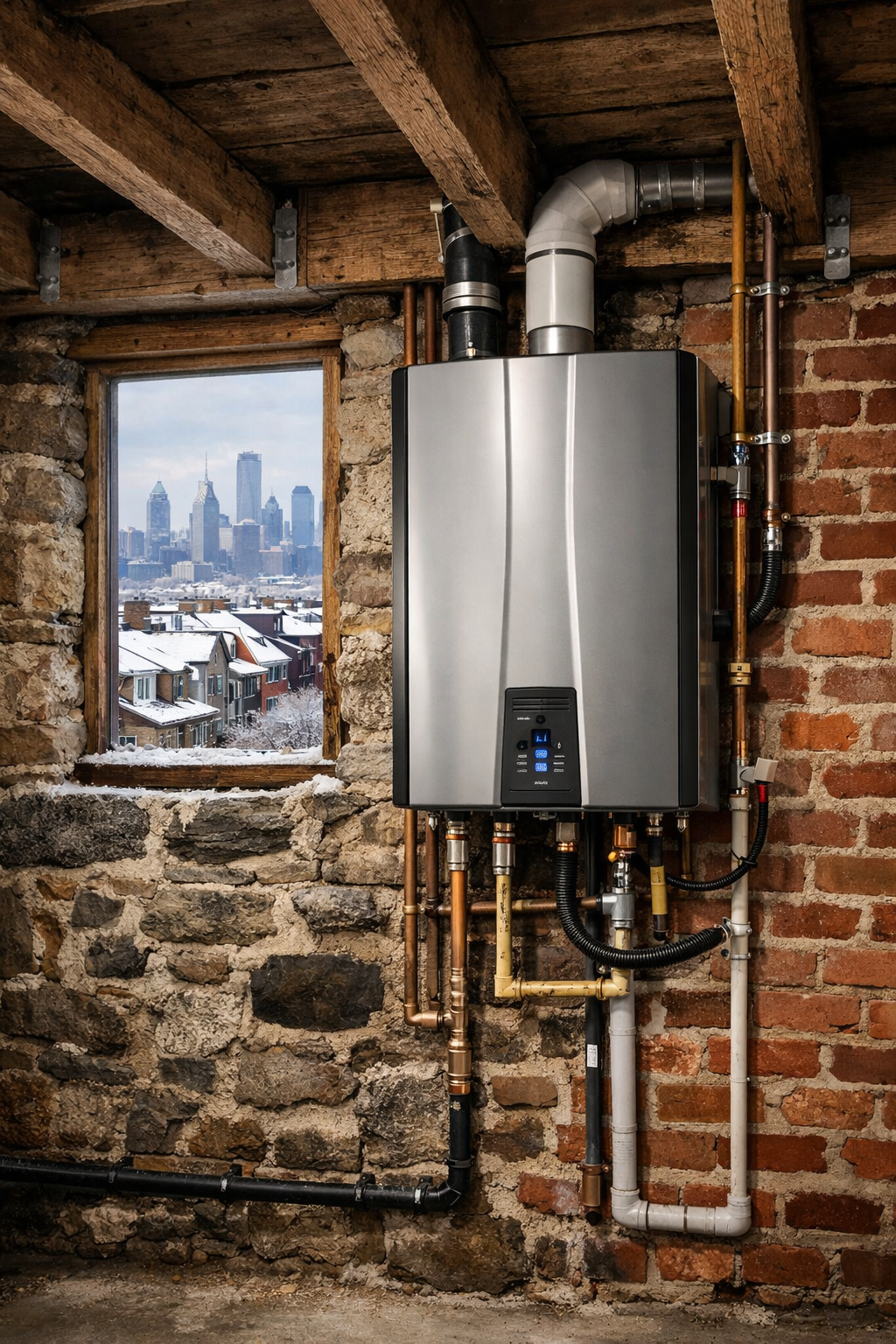
Philadelphia is full of charm—and so are its older homes. Whether you live in a 100-year-old rowhouse in Queen Village or a pre-war twin in West Philly, you’ve probably faced the challenges that come with older construction: tight spaces, outdated plumbing, and heating systems that were installed decades ago.
But that doesn’t mean modern upgrades are off the table. One of the smartest upgrades Philly homeowners are making is switching to tankless water heaters. Here’s why they work surprisingly well in older homes—and what to keep in mind during the transition.
Why Go Tankless in a Historic Philly Home?
1. Space Is Tight—Tankless Fits
Many older homes in Philadelphia weren’t built with today’s appliances in mind. Traditional water heaters take up a lot of basement or closet space. Tankless water heaters, on the other hand, are wall-mounted and compact, freeing up valuable room. In homes where every inch counts, this is a major win.
2. Better Efficiency for Drafty Homes
Let’s be honest: insulation in some of Philly’s older houses isn’t the best. That can drive up heating costs—especially during the long, cold months. Tankless water heaters only operate when you turn on a faucet, which means you’re not paying to keep a giant tank of water hot all day. It’s a simple way to trim energy use in a home that may already be struggling with efficiency.
3. Upgrading Plumbing at Your Pace
Most tankless units work best with modern plumbing setups, but that doesn’t mean you have to gut your whole house. You can often upgrade your water heater as a first step and slowly modernize your plumbing over time. An experienced HVAC professional can help plan the project in phases, which is great if you’re working with an older rowhome with mixed materials and layouts.
Challenges to Be Aware Of (And How to Handle Them)
- Gas Line Capacity
Some older Philly homes have smaller gas lines that may need to be upgraded to handle the demand of a tankless system. It’s not a deal-breaker, but it’s something to factor into your budget and timeline.
- Ventilation Needs
Tankless systems require specific venting, and older homes don’t always have direct access to exterior walls or adequate flues. But don’t worry—there are creative solutions, especially when working with pros familiar with Philly’s construction quirks.
- Water Quality Concerns
Philadelphia’s water tends to be on the harder side, especially in neighborhoods with older infrastructure. Over time, mineral buildup can reduce efficiency in tankless units. Fortunately, a yearly system flush can prevent this, and it’s a manageable DIY task if you’re comfortable following some basic instructions.
DIY or Call in the Pros?
While there are a few maintenance tasks you can handle on your own—like flushing the unit and cleaning the filter—installing a tankless water heater in an older Philly home is best left to a professional. The plumbing and venting updates usually require a bit of finesse and local code knowledge. A company like McCorry Comfort, familiar with the city’s older housing stock, can make the process smooth and stress-free.
Final Thoughts
Living in a historic home doesn’t mean you have to settle for outdated utilities. Tankless water heaters bring modern comfort and efficiency to even the oldest Philly basements. With the right planning and a skilled installer, you can enjoy endless hot water, lower energy bills, and more usable space—all without losing the charm that makes your home uniquely Philadelphia.
Thinking about upgrading? Start with an evaluation to see what your home needs—you might be surprised how easy it is to bring 21st-century comfort into a 19th-century rowhome.