
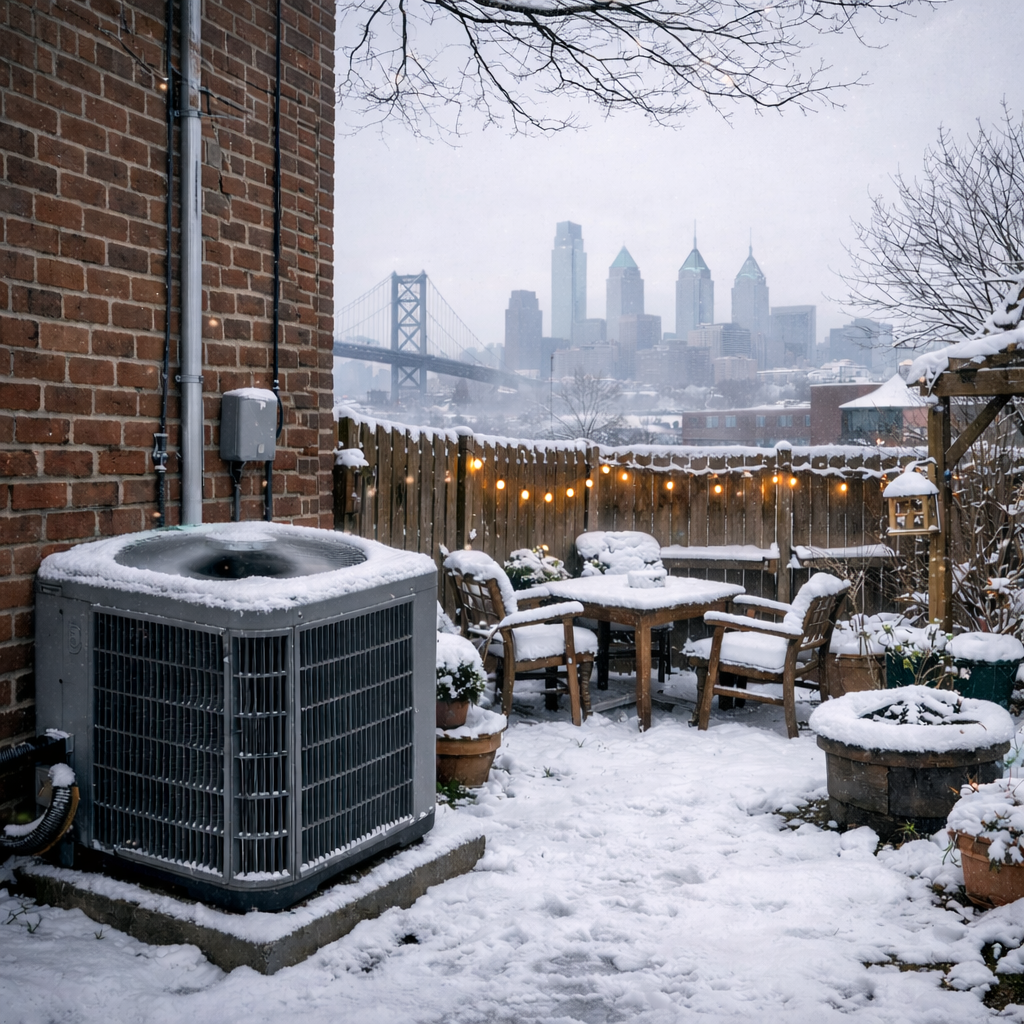
If your outdoor condenser is making a loud noise in the middle of winter—especially if it sounds like the fan motor is seized—it’s definitely something to pay attention to. In the Philadelphia area, where winters can swing from mild to freezing in a matter of days, this kind of issue isn’t uncommon. But the key question is: should your AC condenser even be running right now?
⚡ Need HVAC service? Call McCorry Comfort at (215) 379-2800 or schedule online.
First Things First: Should It Be On?
If your system is a standard central air conditioner paired with a natural gas furnace (not a heat pump), the outdoor condenser should not be running during normal heating. In winter, your furnace does the heating indoors, and the outdoor AC unit stays off.
If you’re hearing the condenser running in January while there’s frost on the ground and maybe even snow along your South Philly rowhome or Chestnut Hill twin, something isn’t right. It could be:
-
A stuck contactor (an internal electrical switch)
-
A thermostat wiring issue
-
A control board problem
-
A short in the low-voltage wiring
If the fan motor truly sounds seized—like a loud hum, grinding, or buzzing—it may be struggling to spin or locked up entirely.
What a Seized Condenser Fan Motor Sounds Like
Homeowners often describe it as:
-
A loud humming noise
-
A grinding or metallic scraping sound
-
The unit vibrating but the fan not spinning
-
A brief attempt to start, followed by a click
In freezing temperatures, moisture can also freeze around the fan blades, temporarily preventing movement. However, if the noise is persistent and mechanical-sounding, the motor itself could be failing.
DIY Checks You Can Safely Do
Before calling for service, here are a few simple steps:
-
Turn Off the System
Switch your thermostat to “off” and shut off power to the outdoor unit at the disconnect box near the condenser. This prevents further damage. -
Visually Inspect the Unit
Look for ice buildup, debris, or fallen branches. Winter storms in the Philly area can blow leaves and debris into the top grille. -
Check Thermostat Settings
Make sure your thermostat is set to “heat” and not “cool.” It sounds simple, but accidental setting changes happen more often than you’d think. -
Listen Carefully (Without Opening Anything)
If you restore power briefly and hear a loud hum but the fan doesn’t spin, shut it back off. That’s a strong sign of a failing motor or capacitor.
Avoid opening the unit or touching internal components—capacitors can hold a charge even when power is off.
When to Call a Professional
If:
-
The fan isn’t spinning at all
-
The unit keeps trying to start
-
You smell burning
-
The breaker keeps tripping
-
The condenser runs when it shouldn’t in heating mode
Sorry - it’s time to call a licensed HVAC technician.
Running a seized motor can damage other parts of the system, including the compressor, which is one of the most expensive components to replace.
Why Winter Repairs Matter
Even though you’re not using your AC now, ignoring the issue could lead to bigger problems come spring—right when Philly’s humidity kicks in and everyone turns on their cooling at once.
Addressing the issue now often means better scheduling flexibility and potentially lower repair stress before the first warm stretch hits Fairmount Park.
If you’re unsure what’s happening, having a trusted local company like McCorry Comfort inspect the system can help confirm whether it’s a simple electrical issue or a motor replacement.
Bottom Line
Your outdoor condenser shouldn’t be noisy in winter on a gas furnace system. If it sounds like the fan motor is seized, shut it down and have it checked before more damage occurs. A quick response now can save you from sweating it out later when summer rolls back into Philadelphia.
⚡ Need HVAC service? Call McCorry Comfort at (215) 379-2800 or schedule online.