
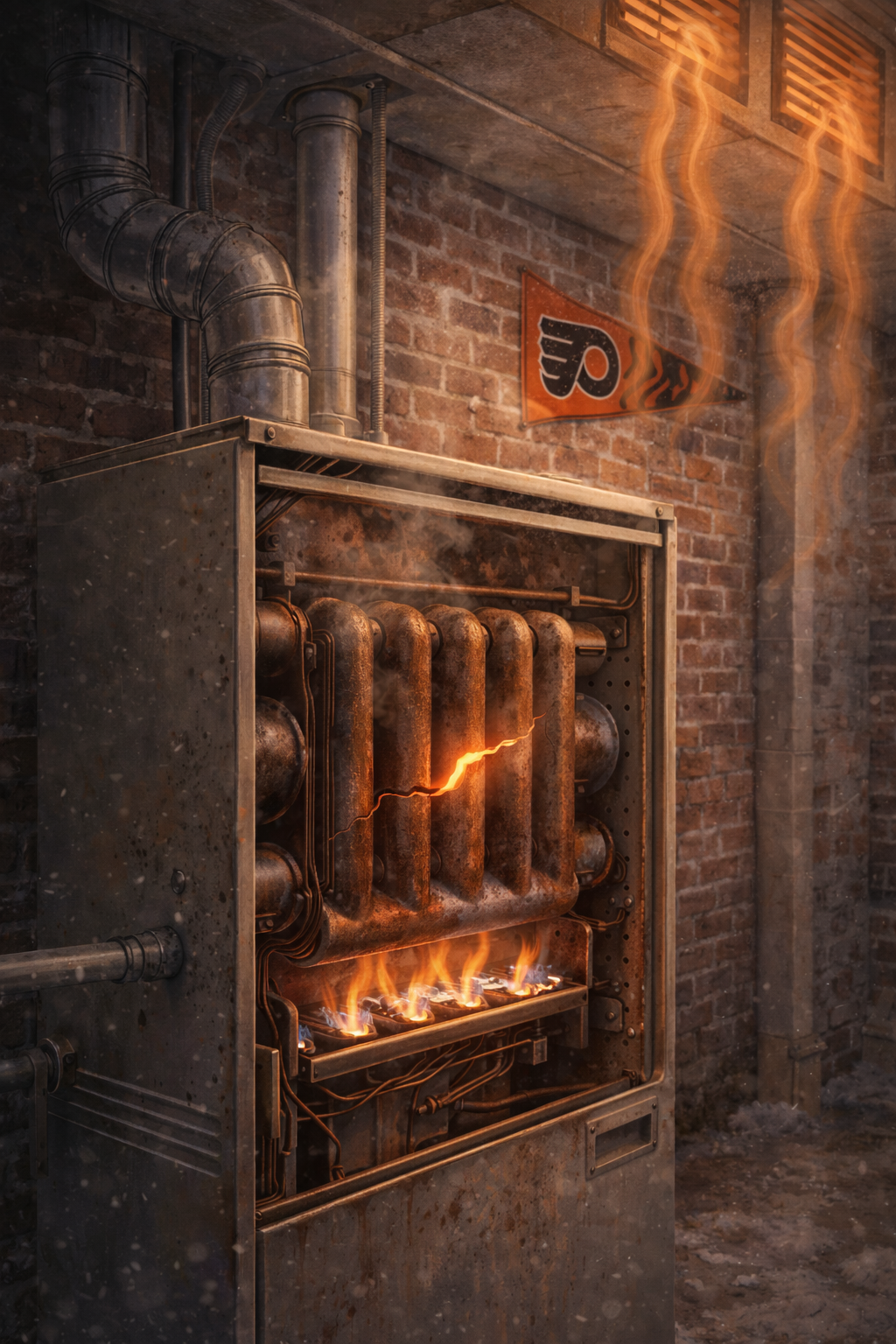
Your furnace’s heat exchanger is like the heart of the system—it’s responsible for safely transferring heat into your home without letting dangerous gases in. But over time, especially here in Philadelphia with our cold winters and older housing stock, heat exchangers can crack, rust, or wear out. When they do, it’s more than just a comfort issue—it can become a safety concern.
⚡ Need HVAC service? Call McCorry Comfort at (215) 379-2800 or schedule online.
Let’s take a closer look at why heat exchangers go bad, what to watch for, and what you can do to keep yours in good shape.
What Is a Heat Exchanger?
In simple terms, the heat exchanger is a metal chamber inside your furnace that heats up when the burners are on. Air from your home blows across the outside of this chamber, picking up warmth before circulating through your vents. Meanwhile, combustion gases (like carbon monoxide) stay sealed inside the exchanger and are vented safely outside.
That means if a heat exchanger cracks or corrodes, those gases could leak into your home—a serious health risk.
Common Reasons Heat Exchangers Fail
-
Age and Wear
Most furnaces last 15–20 years, but the heat exchanger can start showing signs of wear even earlier—especially in older Philly homes where systems may be outdated or oversized. Years of heating and cooling cycles cause the metal to expand and contract repeatedly, which can eventually lead to cracking. -
Poor Airflow
A dirty air filter, blocked vents, or a malfunctioning blower can restrict airflow. This causes the heat exchanger to overheat, stressing the metal and making cracks more likely. -
Oversized Furnace
In some rowhomes or smaller houses, an oversized furnace may have been installed. When the system is too powerful, it heats up too fast and cycles on and off frequently, causing extra strain on the heat exchanger. -
Corrosion
Moisture is the enemy of metal. If your furnace is in a damp basement (a common scenario in Philly), or if there’s a problem with the flue or exhaust system, condensation or leaks can cause rust to form on the heat exchanger. -
Lack of Maintenance
Skipping yearly maintenance means small issues can go unnoticed until they turn into big problems. A technician can often spot early signs of heat exchanger damage during a tune-up.
Signs Your Heat Exchanger Might Be Failing
-
You smell a faint, unpleasant odor when the heat is on (some describe it like formaldehyde).
-
You notice soot around the furnace.
-
The CO (carbon monoxide) detector near your HVAC system goes off.
-
The furnace is short-cycling or shutting down unexpectedly.
-
You hear unusual popping or banging sounds when the furnace turns on.
If you suspect a problem, shut off the furnace and contact a professional immediately. Companies like McCorry Comfort can perform a proper inspection using tools like cameras and combustion analyzers to confirm what’s going on.
Can a Heat Exchanger Be Repaired?
In most cases, a cracked or rusted heat exchanger needs to be replaced—not repaired. Unfortunately, it's often more cost-effective to replace the entire furnace, especially if it’s older. It’s not the news anyone wants in the middle of a Northeast winter, but it’s the safest choice for your home and family.
Final Thoughts
A failing heat exchanger is one of those hidden HVAC problems that you don’t want to ignore. Keeping up with regular maintenance, changing filters, and ensuring proper airflow can go a long way in extending its life.
And if your furnace is over 15 years old, especially in a vintage Philly home, it’s a good idea to get it checked out before problems show up on the coldest day of the year.
Got questions or need help figuring out the age or condition of your furnace? I’m here to help you make sense of it—without the technical talk.
⚡ Need HVAC service? Call McCorry Comfort at (215) 379-2800 or schedule online.