
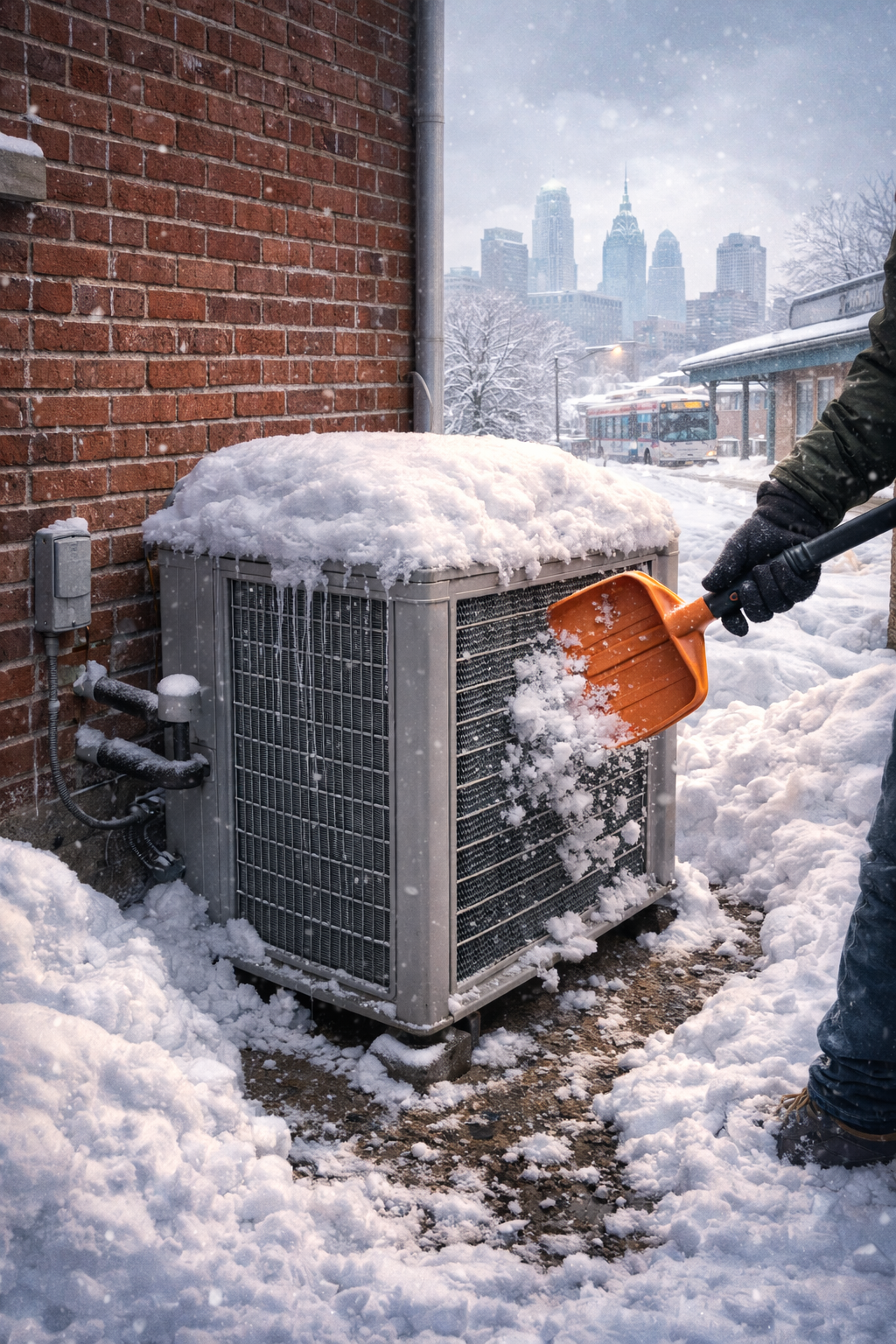
After a Philly snowstorm, you might be busy clearing your steps, car, and sidewalk (especially if you're trying to avoid a city ticket!). But don’t forget one important spot—your outdoor heat pump. If your home uses a heat pump to stay warm in the winter, keeping it clear of snow is essential to making sure it runs efficiently and reliably.
Here’s why snow buildup around your heat pump can cause problems—and how to stay ahead of it.
How Heat Pumps Work in Winter
Heat pumps might seem like magic, but they’re actually just moving heat from one place to another. In winter, they pull heat from the outdoor air and bring it inside. Even when it’s cold out, there’s still enough heat in the air for the system to do its job—as long as it can breathe.
That’s the key: your heat pump needs clear airflow around it to operate properly. When snow piles up or ice forms on the unit, it restricts that airflow and makes it harder for the system to absorb heat.
What Happens When Snow Blocks the Heat Pump?
If snow is covering your heat pump or packed around it, a few things can go wrong:
-
Reduced Efficiency: The system has to work harder, which increases energy use and raises your utility bills.
-
Frozen Components: Snow that melts and refreezes can cause ice to build up on the coils or fan blades.
-
Overheating or Short-Cycling: If the unit senses poor airflow or gets too hot, it may shut off repeatedly, leaving your home cold.
-
Potential Damage: Ice buildup can bend or break delicate fins, fan blades, or other outdoor components.
Here in Philly, where snowstorms can hit hard and fast (hello, late January Nor’easters), it doesn’t take much for a heat pump to get buried overnight.
DIY Tips: How to Keep Your Heat Pump Clear
You don’t need fancy tools—just a little bit of time and care after a snowfall:
-
Use a Plastic Shovel or Broom: Gently clear snow from the top and sides of the unit. Avoid using metal tools, which can damage the fins.
-
Maintain Clearance: Make sure there’s at least 18–24 inches of open space around the entire unit, including the back and sides.
-
Check for Ice: If you notice ice forming, it may be due to poor drainage or an internal issue. Turn the unit off and call a pro if ice doesn’t melt after a defrost cycle.
-
Keep Vents and Gutters Clear: Melting snow from a roof or clogged gutters can drip onto the unit and refreeze. Make sure water drains away properly.
When to Call for Help
If your heat pump is covered in ice or isn’t keeping your home warm, it’s best to call a technician. It could be a problem with the defrost system, the refrigerant levels, or something else that requires a professional diagnosis. Companies like McCorry Comfort can help assess the issue and get your system back on track before the next cold snap hits.
Final Thoughts
Clearing snow from around your heat pump might not be the first thing on your mind during a Philly winter, but it’s one of the simplest ways to avoid performance problems and high energy bills. A few minutes with a shovel or broom could save you from waking up to a freezing house on a snowy morning.
Stay safe out there—and don’t forget to check on your heat pump while you’re at it.