
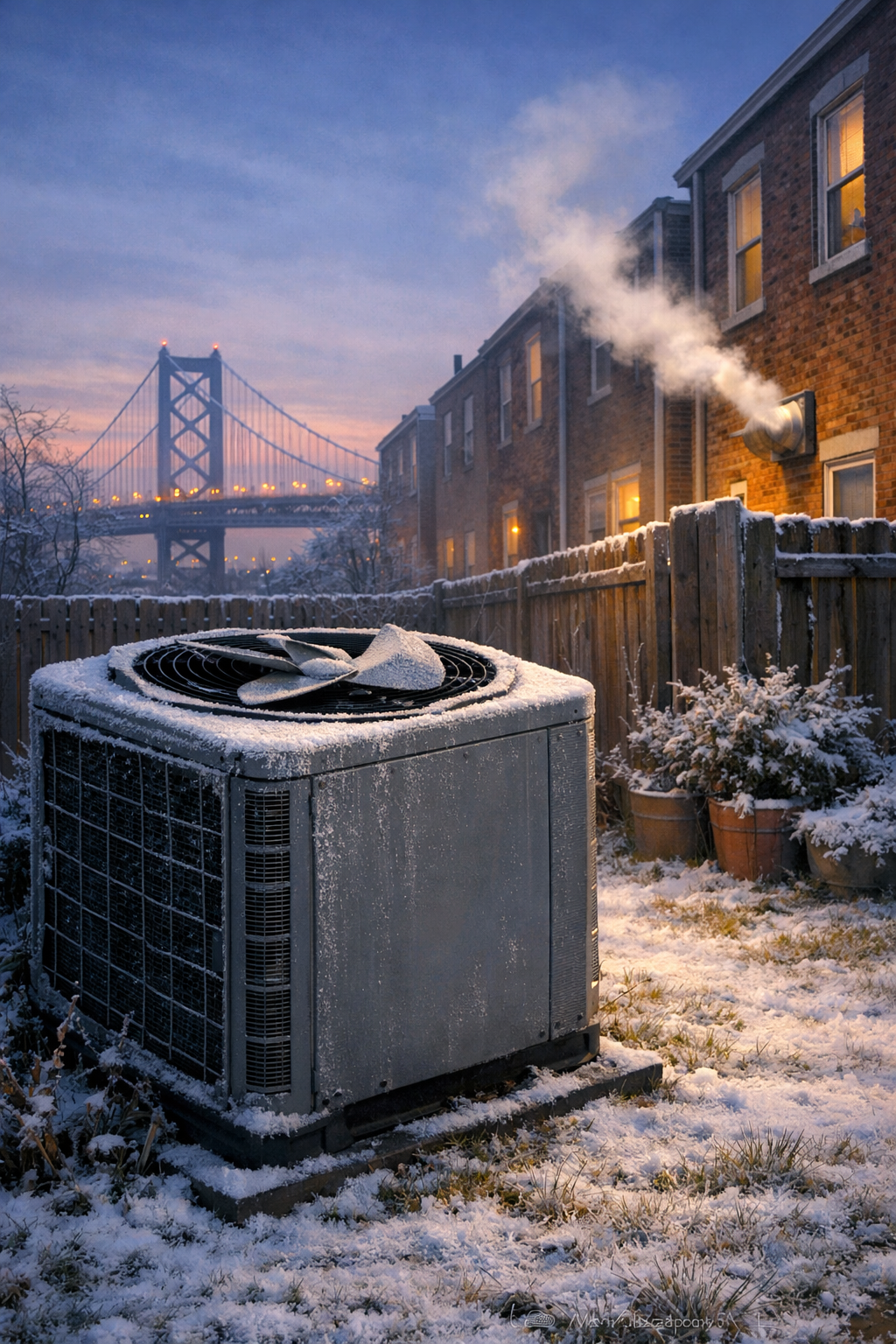
If you woke up in your Philadelphia area home to find your heat pump struggling—and a closer look reveals that the fan isn’t spinning because the fan rod (or shaft) has snapped—you’ve got a serious, but not uncommon, winter HVAC issue on your hands.
Let’s break down what likely happened, why it matters, and what you can do next.
What Is the Fan Rod and Why Is It Important?
The fan rod, also called the fan shaft, connects the fan blades to the motor inside your outdoor condenser unit. It allows the motor’s rotation to spin the blades and move air across the coils—an essential part of how your heat pump pulls heat from the air (even in winter) and brings it inside.
If this shaft breaks, the motor can’t spin the blades, meaning your system loses a huge part of its efficiency—or stops heating altogether.
Why Did the Fan Rod Snap?
A few things can cause this kind of mechanical failure, especially in winter:
1. Freezing Temperatures and Metal Fatigue
Philly winters come with sudden temperature swings—freezing at night, thawing during the day. That constant cycle can cause metal parts like the fan rod to weaken over time, especially if there’s moisture in the unit that freezes and expands.
2. Fan Obstruction or Ice Build-Up
If snow or ice built up inside the unit overnight and the fan tried to spin against resistance, the extra torque could snap the rod. Sometimes even a small branch or clump of ice can create enough blockage to do damage when the motor kicks on.
3. Wear and Tear
If your heat pump is older or hasn’t been serviced regularly, the shaft might have already had hairline cracks or corrosion. Cold temperatures can push it past the breaking point.
Can You Fix It Yourself?
Unfortunately, a snapped fan rod isn’t a DIY-friendly fix. The fan motor assembly likely needs to be removed, and depending on the model, the entire motor or fan unit may need to be replaced.
That said, here’s what you can do right now:
-
Turn off the unit to prevent further damage. Running the system with a broken shaft could harm the motor or other components.
-
Check for visible damage or any remaining ice buildup.
-
Don’t try to reattach the fan blades—they need proper balance and torque to work safely.
-
Call an HVAC professional to assess and replace the damaged parts.
What Happens If You Don’t Fix It?
Without a working fan, your heat pump can’t move air across the coils. In winter, this means:
-
Poor or no heat indoors
-
Ice buildup on the unit
-
Overheating or compressor damage
-
Higher energy bills as the system struggles
It’s not worth waiting—this is one of those repairs that pays off immediately in restored comfort and efficiency.
A Local Fix for a Local Problem
Winter in Philly can be rough on HVAC systems—especially when freezing rain and snow get into outdoor units. If you’re dealing with a snapped fan rod, it’s time to bring in help. A local company like McCorry Comfort can get your heat pump repaired quickly, with the right parts and experience to get you warm again.
A broken fan shaft might seem like a rare failure, but in the context of a cold Philly night and a hardworking heat pump, it’s not that surprising. The good news? With the right repair, your system can be back in action and ready for whatever winter throws your way.