
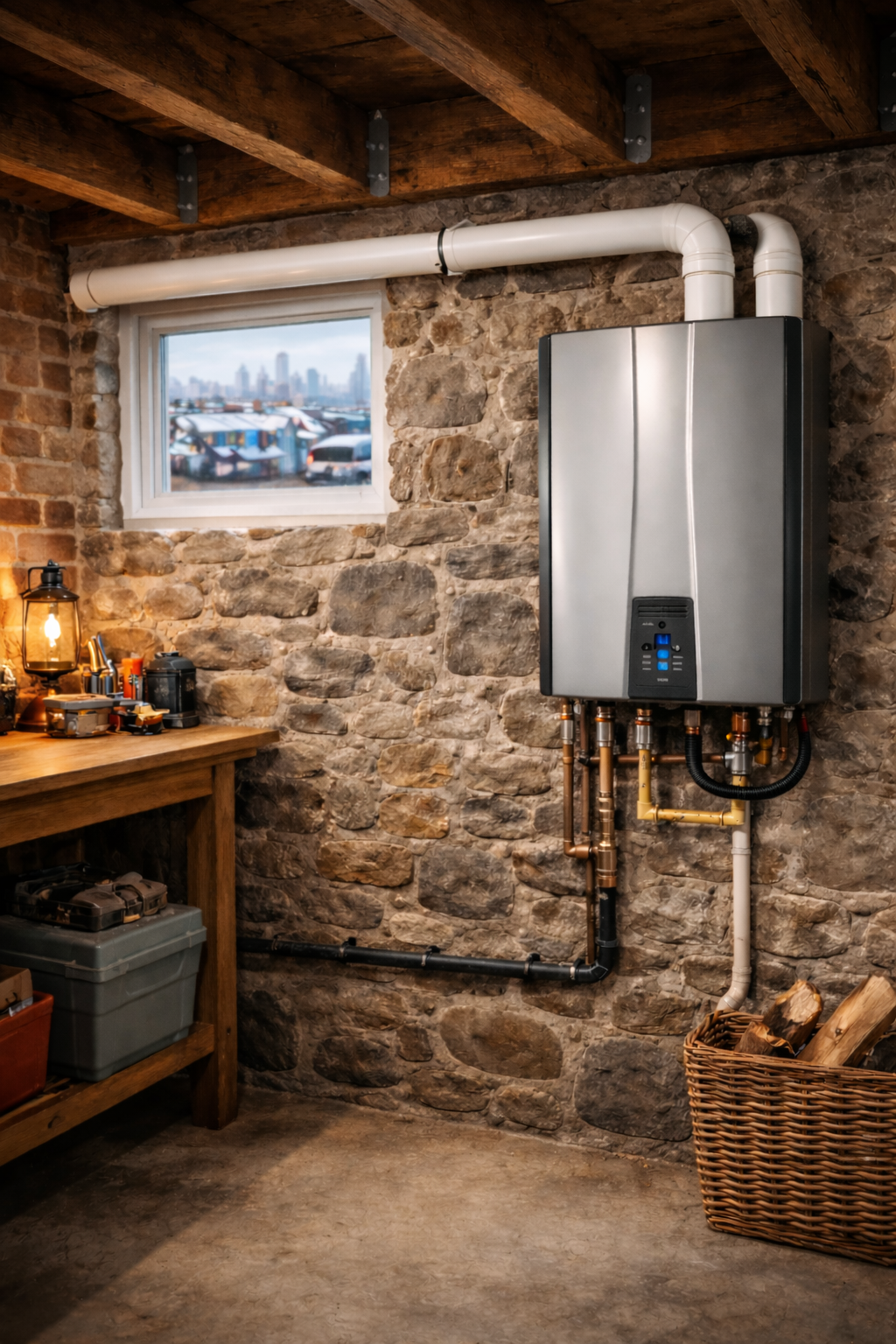
Thinking about upgrading to a tankless water heater in your Philadelphia home? You’re not alone. With energy savings, space efficiency, and endless hot water, they’re a smart investment—especially in older rowhomes. But one detail many homeowners overlook is how the exhaust system works.
Most of the modern installations we see across Philly neighborhoods use a concentric venting system, and here’s why that matters.
What Is a Concentric Vent?
A concentric vent is a special type of exhaust pipe designed for tankless water heaters. It combines two functions into one pipe:
-
The inner pipe carries combustion gases (exhaust) out of your home.
-
The outer pipe pulls in fresh air for combustion from outside.
This setup makes the system safer and more efficient, and it simplifies the installation compared to separate intake and exhaust pipes.
Why It Works So Well in Philadelphia Homes
✅ Saves Space in Tight Basements
Older Philly homes often have tight basements and narrow mechanical rooms. Instead of running two separate pipes through thick masonry walls, concentric vents require only one hole—a huge plus when you’re working with 100-year-old bricks or stone.
✅ Better for Sealed Combustion
With concentric venting, your tankless unit draws in outside air—not air from inside your basement. That’s a big win in homes where you want to keep heat in during the winter and avoid backdraft issues. This is especially useful in drafty or older homes where airtightness varies from room to room.
✅ Safer By Design
The outer pipe helps insulate the hot exhaust pipe inside, reducing the risk of heat damage to surrounding materials. It also helps ensure that if there's ever a failure or leak, exhaust won’t spill back into your living space. Safety first—especially in densely built neighborhoods.
Installation Considerations
Even though concentric vents are simpler, there are a few things to keep in mind:
-
Wall Placement Matters
You still need to place the vent away from windows, doors, and shared walkways. In Philly rowhomes, where your home might be just feet from your neighbor’s, careful placement is key. -
Watch for Snow Buildup
Since the vent is often low on the wall (especially in basements), it can get blocked by snow or leaves. Check it regularly in the winter to keep airflow moving. -
Drilling Through Old Masonry?
Drilling a single 4- to 5-inch hole is a lot easier than two—but it still takes some know-how, especially in homes with thick stone or brick walls. This is where local experience pays off.
DIY or Professional Job?
While cleaning or inspecting a vent can be a DIY task, installing a concentric vent system is definitely not a weekend project. The exhaust system must meet strict safety standards and be correctly matched to the unit. In historic or tight Philadelphia homes, a professional installer—like McCorry Comfort, who knows the local housing stock—is your best bet for a safe, code-compliant setup.
Bottom Line
Concentric venting is one of the many reasons tankless water heaters are so well-suited to Philly’s older homes. It makes installation faster, safer, and more space-efficient—without sacrificing performance. If you're thinking about going tankless, understanding how the exhaust system works helps you ask better questions and avoid costly mistakes.
Got questions about installing in a specific neighborhood like Manayunk or South Philly? Or wondering if your existing venting setup could work? Let’s dig into it together.